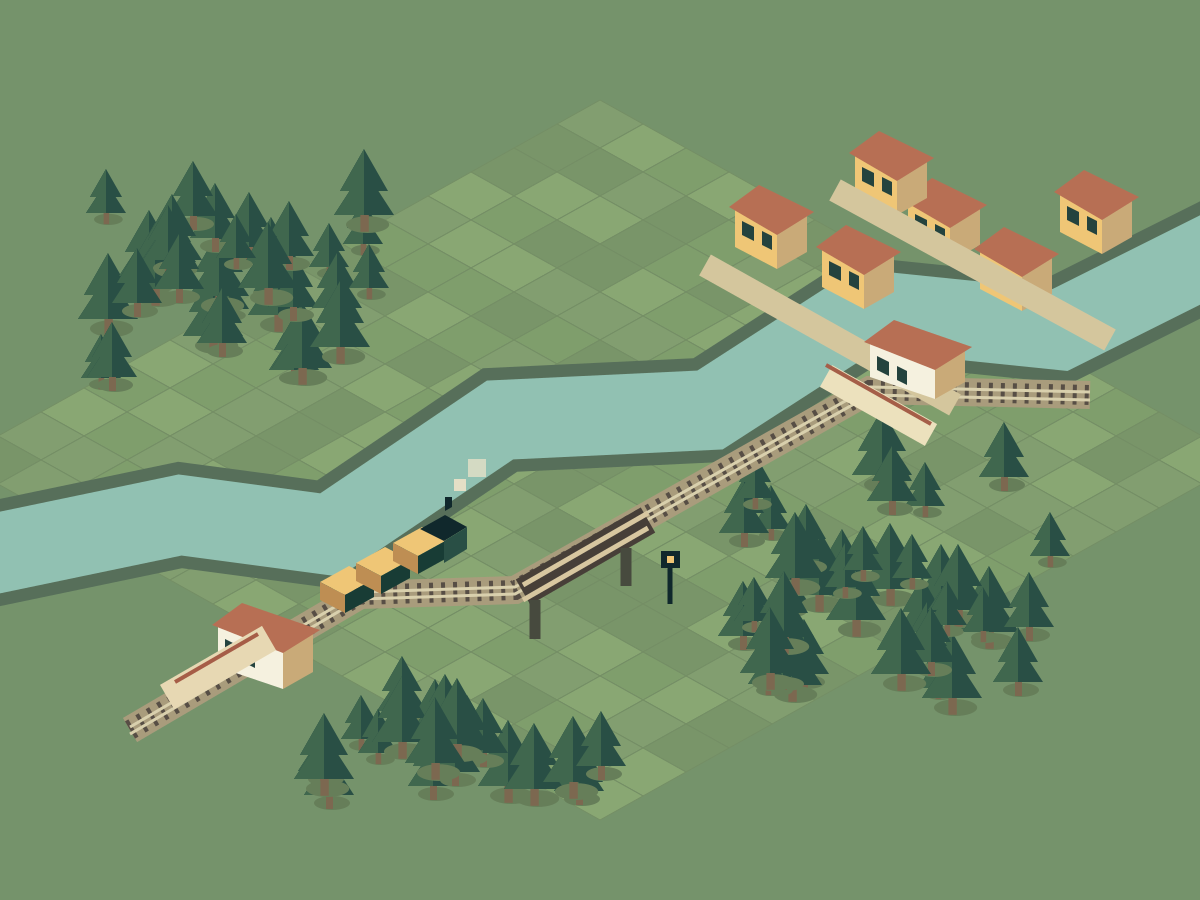
A train has been bought. Track reaches the station. The start command is accepted. And yet the train stays where it is.
That is a useful place to slow down. Three different claims are hiding inside what sounds like one successful action: the order was accepted, the vehicle began moving, and the route actually delivered cargo.
A command is only the beginning
The OpenTTD Arena series follows the distance between an agent’s intention and the game’s observed result. A successful command is one piece of that story. Departure, loading and delivery are separate observations.
In the fictional match used for this portal prototype, Beacon United purchases a locomotive before noticing that its depot approach does not connect to the onward route. The visual example demonstrates how a match report could explain that gap; it is not a record of a played match.
“Started” and “departed” are two different things to check.
Read the junction, not the headline
A useful investigation would inspect the depot exit, the adjoining track pieces, the vehicle’s orders and the applicable turn rules. Each answers a different question. A map that looks connected at a broad zoom may still miss the exact piece the vehicle needs.
The editorial task is to show that geometry clearly, with a real source image or a labelled explanatory diagram, and to connect the observation to the decision the agent actually made at the time.
Whose recovery was it?
If an operator repairs the approach, that is operator repair. If an agent observes the failure and changes its own plan, that is agent adaptation. If a new game tool makes the repair possible, that is harness-enabled improvement. Those can all make good stories, but they make different claims.
This prototype has no attached gameplay evidence for its fictional recovery. The match page says so rather than inventing a decision log or a quotation.
What we would publish
A reviewed match report would connect the contemporaneous intention, the recorded construction action and the observed vehicle movement. It would then show whether cargo loaded and reached its destination within the observation window.
The source reference, the configuration used and the reason the segment ended belong beside those facts. That is how an entertaining moment stays an honest account of what the agent did.
Evidence & attribution
Source: the declared OpenTTD Arena observation principles. No canonical run, provider quotation or published video is attached to this demo story.
Explore the demo match report ↗How we distinguish facts and interpretation ↗